
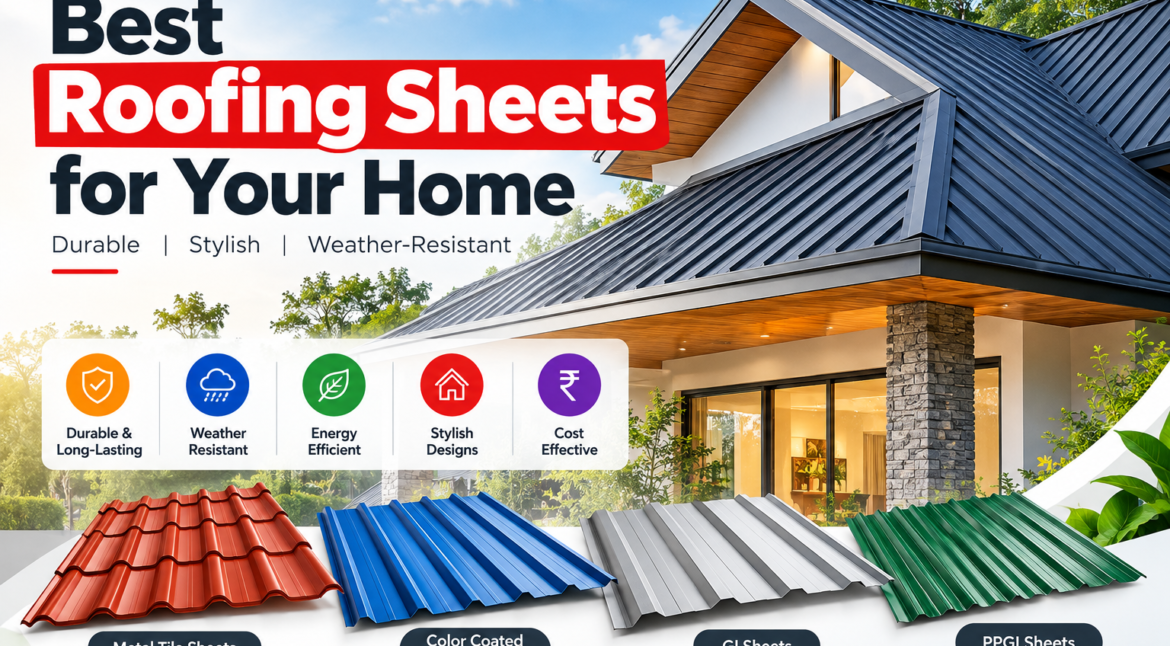
Building a house involves plenty of choices, but the roof is something you will live with for years. A wrong choice may leave you dealing with leaks during the monsoon, uncomfortable rooms in summer, or repair bills you never expected. That is why it is worth spending some time comparing roofing sheets before placing an order. Walk into a roofing materials shop and you will find sheets in different colours, thicknesses, designs, and price ranges. One option may look attractive because it is affordable, while another may promise better protection against rust or rain. The challenge is knowing which features actually matter for your house. If you are searching for the Best Roofing Sheets for Your Home, begin with three practical questions: What kind of weather does your area experience? How much can you spend on the complete roofing work? And how much maintenance are you prepared to handle in the coming years? Your answers will help narrow down the choices and make the buying decision easier. In the sections below, we will look at the available materials and the details worth checking before you make your final choice.
Why Is Choosing the Right Roofing Sheet Important?
A roofing sheet isn’t just something that sits on top of a building — it does a lot of the quiet work that keeps a home livable. It protects everything underneath it, has a direct hand in how hot or cool the inside stays, deals with wherever the rainwater ends up going, and over the years, it’s a big part of whether the building holds up or starts showing its age early. Pick the wrong material and you’ll feel it — rooms that turn into ovens by afternoon, rain that sounds like it’s hitting a drum right over your head, sheets that start rusting faster than expected, water finding its way in where it shouldn’t, or just needing someone up there fixing something every few months. None of that is cheap, and it adds up fast, turning what should’ve been a one-time decision into an ongoing expense. This is exactly why getting the Best Roofing Sheets for Your Home right from the start matters more than people usually expect — it’s not a detail to rush through. A roofing material that actually fits your situation does the opposite — it holds up against whatever weather comes its way and keeps maintenance calls few and far between. It also just looks right, whether you’re putting up a traditional-style home, a modern villa, or a smaller residential build — the roof becomes part of the overall look, not something that clashes with it. It’s worth figuring out what the roof will actually face over the year — the heat, the rain, the wind — before you even start looking at brands or comparing prices.
7 Important Factors to Consider Before Buying Roofing Sheets
1. Consider Your Local Climate
Climate deserves to be one of the first things you check, not an afterthought once you’ve already picked a material. Something that holds up fine in a dry climate can struggle the moment it’s dealing with heavy rain, nonstop humidity, or strong wind instead. This is exactly where Kerala stands out — the monsoons don’t hold back, and the humidity barely eases up through most of the year. So water resistance, protection from corrosion, and drainage that genuinely works aren’t bonus features here, they’re what decide whether a roof is actually good. A sheet that can’t take constant moisture and weather that won’t sit still isn’t really suited for a Kerala home. Homes that sit under strong sun for most of the day feel the difference the roof makes — the colour, the finish, the insulation, the ventilation, all of it adds up to whether the inside stays livable or turns into an oven by afternoon. Near the coast, there’s a separate issue to watch for: salt in the air wears through certain metals quicker than people expect, so it’s worth actually checking the coating and what the manufacturer says is suited for that kind of exposure, rather than just picking up whatever standard sheet is on the shelf.
2. Understand the Different Types of Roofing Sheets
Roofing sheets aren’t all built the same, performance-wise. Knowing what’s actually out there — and how each option holds up — is what lets you weigh the real advantages against the trade-offs, instead of just picking by price or name.
Metal Roofing Sheets
Metal roofing sheets are widely used for residential, commercial, and industrial buildings. Depending on the product, they may be made from galvanised steel, coated steel, or aluminium. What makes these sheets work across so many different building styles comes down to three things: they’re lighter, they’re available in a decent spread of profiles, and they’re not a nightmare to install. That said, how they actually hold up once they’re up there depends on the details — the type of metal, the sheet’s thickness, how good the protective coating is, and, just as much, whether whoever installed it actually did it right. When you’re comparing metal sheets against each other, look closely at corrosion resistance, what the coating specifications actually say, and the warranty terms — those three tell you more than the price tag does. And if the roof is going over bedrooms or any living space, don’t skip insulation and how well it handles rain noise, because that’s the part people usually end up regretting if they ignored it upfront.
Galvanised and Galvalume Roofing Sheets
Galvanised steel sheets rely on a zinc coating to keep the steel from corroding. Galvalume-type sheets take a different route — an aluminium-zinc coating — which shifts the balance a bit, trading off corrosion protection and durability differently. Neither one is automatically the right call everywhere. How well either actually performs comes down to the quality of the product itself, what environment it’s exposed to, the coating specifications, and how it’s maintained over time — not just which name sounds more advanced. Ask the supplier for the exact product specification instead of relying only on the material name.
Fibre Cement Roofing Sheets Fibre cement sheets are made using cement-based materials reinforced with fibres. They are used in some residential, utility, and agricultural structures. These differ from metal roofing in some pretty practical ways — weight, how they need to be handled, and how they actually get installed. Before committing, it’s worth confirming the supporting structure is actually built for the product you’ve picked, and that the material itself meets the safety requirements that apply to it.
Polycarbonate Roofing Sheets
Polycarbonate sheets tend to show up over skylights, patios, verandas, car parking areas — basically anywhere you actually want daylight coming through rather than being blocked out. They come in different colours, thicknesses, and levels of light transmission, so there’s some flexibility there. But a transparent or translucent roof also means a lot more solar heat can get into the space underneath it, which isn’t always obvious until you’ve lived with it for a summer. Before settling on this material, it’s worth checking UV protection, how well it controls heat, weather resistance, and whether it actually suits what you’re using the space for.
3. Check Durability and Product Quality
A roofing sheet needs to hold up against whatever conditions it’s meant for, without turning into a repair job that could’ve been avoided in the first place. But you can’t really tell how durable something is just by looking at it — appearance alone doesn’t say much about how it’ll actually perform over time. Check the sheet’s thickness, the quality of the coating, material grade, profile, and whatever the manufacturer actually specifies on paper. And don’t just take the warranty at face value — ask whether the product’s actually been tested against the relevant performance standards, and whether that warranty covers things like corrosion, coating failure, or other specific defects, rather than just sounding reassuring without covering much. It’s also worth paying attention to the accessories that come with the sheets, not just the sheets themselves. The right screws, washers, flashing, ridge components, and sealing materials are what actually turn individual sheets into a proper, complete roofing system — skip on any of these and the rest of the roof doesn’t really hold up the way it should. Remember that even a good-quality product can perform poorly if it is transported, stored, or installed incorrectly.
4. Evaluate Heat Insulation and Indoor Comfort
The roofing material you pick can genuinely shift how hot a house feels inside, especially if it’s sitting under direct sunlight most of the day. Metal sheets do heat up in the sun, that part’s true — but the indoor temperature you actually end up with depends just as much on the full roof assembly, the ventilation, insulation, colour, and how the ceiling itself is designed. It’s rarely down to just the sheet alone. If cutting down on heat is actually the priority, it’s worth looking at reflective finishes, insulation that’s suited to the space, a ceiling system that works with it, and ventilation that’s doing its job properly. None of these work well in isolation — they need to be planned together, rather than expecting the roofing sheet on its own to carry all of it. For instance, a properly insulated roof that’s actually been designed well can end up far more comfortable to live under than a bare sheet slapped on without enough ventilation behind it — even if that bare sheet is technically the “better” material on paper. Talk through the complete roof design with your contractor before deciding which upgrades are actually worth adding and which aren’t.
5. Compare the Total Cost, Not Just the Sheet Price
Budget obviously matters, but the cheapest price per sheet doesn’t automatically mean the cheapest project overall — that number rarely tells the whole story. When you’re actually comparing the Best Roofing Sheets for Your Home, factor in everything that comes with it — the material itself, the supporting framework, fasteners, flashing, labour, transport, insulation, and whatever extra accessories the installation ends up needing. Leave any of that out and the “budget” option can quietly turn out to be the more expensive one. A product that costs more upfront can still be the better value overall, if it actually meets your durability needs and cuts down on maintenance down the line. But on the flip side, paying extra for features your building was never going to need in the first place isn’t really getting you anything — that’s money spent on capability you’ll never use. Request a detailed quotation from more than one reliable supplier. Ensure that each quotation covers comparable specifications, quantities, accessories, and installation requirements before making a decision.
6. Choose the Right Design and Colour
Roofing sheets come in a range of profiles, colours, and finishes, and what you pick should match the building’s design without losing sight of how it actually performs day to day. Roofing sheets are available in different profiles, colours, and finishes to suit various house designs. Lighter, reflective finishes may help reduce heat absorption, depending on the product and roof design. Choose a sheet profile that suits your roof’s slope and drainage requirements, and check the manufacturer’s installation guidelines before making your final choice. Choose a finish that complements your home’s exterior and is appropriate for the surrounding environment.
7. Verify Installation and Maintenance Requirements
Getting the installation right matters just as much as picking the right sheet in the first place. Screws placed wrong, a protective coating that’s already been damaged during fitting, flashing that doesn’t sit properly, or overlaps that aren’t wide enough — any one of these can quietly turn into a leak or wear the roof down well before it should. Before starting the work, confirm that the contractor understands the manufacturer’s installation instructions. The roof should have an appropriate slope, sufficient structural support, and properly planned drainage. Maintenance requirements should also influence your choice. Some roofing systems need periodic checks for loose fasteners, damaged coatings, debris accumulation, or blocked gutters. A simple inspection after severe weather and routine cleaning where appropriate can help identify minor problems before they become costly repairs.
Which Roofing Sheet Is Suitable for Your Home?
The right material depends on your building’s requirements.
For many homes, coated metal roofing sheets may be worth considering because of their relatively low weight and availability in different designs. In humid or coastal environments, the coating and material’s suitability for the specific exposure are particularly important. Fibre cement tends to make sense in specific cases, basically where what it’s made of and what the structure actually calls for happen to match up well. Polycarbonate, meanwhile, fits better in places where letting natural light through is actually the point, think verandas or other covered outdoor spots. No one material works best for every house, that kind of universal answer just doesn’t exist here. The real move is weighing what’s available against your climate, the roof’s actual structure, your budget, how much comfort you’re expecting, and how much maintenance you’re genuinely willing to keep up with. When you’re actually trying to figure out the Best Roofing Sheets for Your Home, bringing in a qualified roofing professional is worth it, someone who can inspect your building in person and explain what genuinely separates the products sold in your area, instead of leaning on brochure claims or a rough guess.
Conclusion
Selecting roofing sheets requires careful consideration of weather conditions, durability, thermal comfort, installation, appearance, and overall cost. Taking time to compare these factors can help you avoid common mistakes and choose a roofing solution that suits your home. The Best Roofing Sheets for Your Home are those that meet your building’s requirements, provide suitable protection against local weather, and offer reasonable long-term value. Before placing an order, review the product specifications, compare quotations, and consult an experienced roofing professional.
